Trusts & Estates for Complex Lives

Strategic Estate Planning for What You’re Building—and What Comes Next

Jeffrey Cardon helps founders, business owners, real estate investors, and families coordinate trusts, assets, business interests, risk, succession, and long-term planning into one coherent strategy.

Refined residential interior representing the personal, family, and financial life coordinated through strategic estate planning.

Planning That Changes with You

Your Estate Plan Should Evolve as Your Life Becomes More Complex

The planning that works when a business is small, a family is young, or wealth is still being built may not be enough years later.

As businesses grow, investments increase, personal guarantees accumulate, and ownership structures become more complicated, new risks and planning opportunities appear. A future sale or other liquidity event may introduce tax questions. A growing family may create new succession concerns. Long-term planning may begin to involve asset protection, charitable giving, multigenerational planning, or more sophisticated trust structures.

A good estate plan should not remain frozen while the rest of your financial life changes. The structure should be reviewed and adjusted as your risks, assets, responsibilities, and objectives change.


Your plan should grow with you.

Four Planning Areas

Different Planning Requires Different Tools

Cardon Law specializes in four distinct planning areas. Some people begin with one. Others move between several as their family, business, wealth, and responsibilities change.

Foundational Planning

Build the legal and decision-making foundation for incapacity, death, family responsibilities, and the transfer of assets.

  • Revocable trusts
  • Wills and incapacity planning
  • Guardianship and family instructions
  • Ownership and beneficiary coordination

Advanced Planning

Move beyond basic estate planning when the objective involves asset protection, tax strategy, charitable planning, multigenerational planning, or other specialized goals.

  • Asset protection
  • Income and transfer tax planning
  • Charitable planning
  • Multigenerational strategies

Business Planning

Coordinate the business side of your life with the trusts, ownership structures, succession plans, and family planning that surround it.

  • Ownership and entity coordination
  • Business succession
  • Exit Planning
  • Continuity when the owner cannot act

Trust Administration

Help trustees and families understand what the trust requires, what decisions must be made, and how the plan is carried out after incapacity or death.

  • Trustee responsibilities
  • Trust interpretation
  • Distributions and administration
  • Coordination among beneficiaries and advisors

Advanced Planning

Some Goals Require More Than a Foundational Estate Plan

A foundational plan can address incapacity, death, probate avoidance, family decision-making, and many important distribution questions. But some objectives require additional structures, timing, and legal strategy.

Advanced planning begins when the goal extends beyond the basics and the plan needs to respond more directly to risk, taxes, transactions, charitable intent, or long-term family objectives.

Asset Protection

Protect selected personal assets from unnecessary exposure while coordinating trusts, entities, insurance, and other risk-management tools.

Tax Planning

Evaluate income-tax, estate-tax, gift-tax, and generation-skipping transfer-tax opportunities when wealth, timing, or transactions make additional planning worthwhile.

Charitable Planning

Coordinate charitable goals with the larger estate plan using strategies such as charitable trusts, donor-advised funds, foundations, or other giving structures when appropriate.

Exit Planning

Plan around a sale, transfer, succession event, or other major transaction before the opportunity becomes fixed and the planning window narrows.

Multigenerational Planning

Create structures intended to carry assets, judgment, and family intent beyond one generation rather than focusing only on the next transfer.

Special Situations

Address planning goals that do not fit neatly into a standard estate-planning model and may require customized trust design, role separation, or other specialized techniques.

Business Owner Planning

Your Business Life Does Not Stay in the Business

Business owners often build complexity one decision at a time. A new entity is formed for a property. A lender requires a personal guarantee. Ownership changes. Investments accumulate. A partner comes in. A succession plan gets discussed. Over time, the business structure, personal wealth, trusts, and family responsibilities begin to overlap.

That system may work perfectly well while the owner is the person holding all of the knowledge.

The problem comes when someone else has to step in.

Good planning connects the business life with the estate plan so ownership, authority, succession, asset protection, and family responsibilities work together rather than as a collection of disconnected documents and entities.

Refined executive office with warm wood finishes, representing strategic business planning, ownership decisions, and long-term continuity.

Business Ownership ↔ Trust Ownership

Who owns the business interest, how that ownership is titled, and how it transitions should coordinate with the estate plan.

Personal Guarantees ↔ Personal Assets

Business obligations can reach beyond the company and expose the assets the family has accumulated outside it.

Business Succession ↔ Family Continuity

A succession plan is not only about who runs the company. It also affects income, control, family relationships, and what happens if the owner suddenly cannot act.

Liquidity Events ↔ Tax and Trust Planning

A sale, recapitalization, or other major transaction can create planning opportunities that may need to be addressed before the transaction is complete.

Who We Help

Planning Matters Most When More Pieces Have to Work Together

The need for sophisticated planning is not defined by one net-worth number or one type of asset. It usually appears when family, ownership, businesses, investments, risk, and responsibility begin to overlap.

Founders & Business Owners

As a business grows, the owner may accumulate multiple entities, personal guarantees, valuable business interests, investment assets, succession concerns, and family responsibilities. Planning becomes less about one trust and more about making the entire structure coherent.

Real Estate Investors

Real estate investors often combine leverage, multiple entities, personal guarantees, concentrated property exposure, and significant long-term equity. The planning question is not only how each property is owned, but how investment risk, personal assets, trusts, and family continuity fit together.

Trustees & Surviving Spouses

When someone dies or becomes unable to act, the planning stops being theoretical. Trustees and surviving family members may suddenly need to interpret documents, locate assets, understand ownership, make distributions, coordinate advisors, and carry out decisions they did not design.

The Cardon Law Approach

A Good Estate Plan Has to Work as One Coordinated System

Estate planning is not simply a matter of having the right documents in a binder. A trust can be well drafted and still fail to accomplish its purpose if assets are owned incorrectly, authority is given to the wrong person, business interests are not coordinated with the plan, or the structure no longer fits the family’s circumstances.

The planning work is understanding what needs to happen, identifying which legal rights and responsibilities matter, and then aligning the documents, ownership, people, and structures around that objective.

That may mean coordinating a revocable trust with business entities. It may mean separating investment authority from distribution authority in an advanced trust. It may mean making sure incapacity documents allow the right people to communicate and act. Or it may mean simplifying a structure so someone other than the person who built it can actually understand and administer it.

Legal Documents

The written terms need to match the actual objective.

Asset Ownership

How assets are titled can support the plan—or quietly undermine it.

Decision-Making Authority

The right people need the right authority at the right time.

Trust and Entity Structure

Trusts, LLCs, corporations, and other structures should work together rather than independently.

Family and Fiduciary Roles

Trustees, agents, beneficiaries, spouses, and successors need clear responsibilities.

Risk, Tax, and Long-Term Objectives

The structure should reflect the risks and opportunities that actually matter to the client.

The paper is the deliverable. The planning is the work.

Experience Behind the Planning

Sophisticated Planning Requires More Than Knowing Which Documents to Prepare

Jeff Cardon has focused his practice on trusts, estates, and related planning for more than two decades, helping clients design, implement, and administer structures intended to hold up through changing laws, changing families, business transitions, and real-world fiduciary decisions.

His work also extends beyond applying Utah trust law. Jeff has participated in significant legislative work involving Utah’s trust statutes, including directed trusts, trust modification and decanting, asset protection, capacity standards, and other areas that shape how modern trust planning works in the state.

That experience matters because advanced planning often turns on details: which powers should be retained, which responsibilities should be separated, how ownership should be structured, what law governs, and how the plan can remain flexible without undermining its purpose.

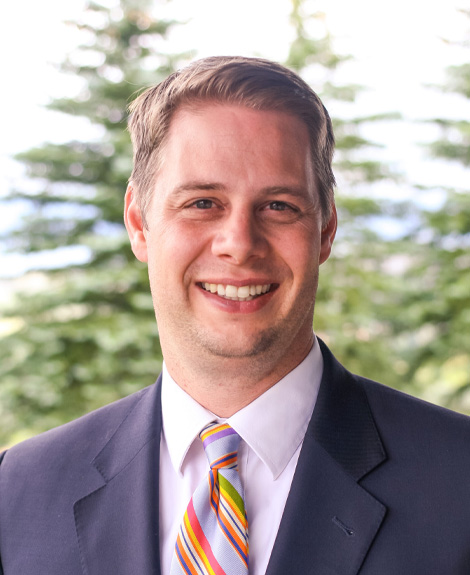
Portrait of attorney Jeff Cardon in a suit and tie.

Practicing trusts & estates law since 2005

Contributor to significant Utah trust-law legislation

Best of Utah Valley recognition

Utah Valley Estate Planning Council Membership

What to Expect

You Should Understand the Process Before You Begin

Estate planning can involve significant decisions about family, ownership, business interests, risk, and long-term goals. The legal process should not add unnecessary uncertainty.

Cardon Law uses a defined planning process so clients can understand what happens next, what decisions need to be made, and where the work is headed. Pricing is also discussed openly so the scope and investment can be evaluated before moving forward.

Understand the Process

Understand the path from the initial consultation through plan design, drafting, review, signing, funding, and the follow-up steps that help put the plan into effect.

Explore the Planning Process

Understand the Investment

Review how Cardon Law approaches pricing for foundational estate planning, asset protection, and more advanced strategies so you can better understand the likely scope before scheduling.

View Planning Costs
Stephen
After a couple of meetings, Jeff provided a very professionally put together trust for us which included everything we had discussed. Throughout the process, he spoke to us in terms we could understand as he explained the legal jargon and all we were doing. We felt very confident with his legal expertise and we are grateful we turned to him for help. Jeff is kind, patient, and trustworthy. Again, his way of explaining things was really next level.
Google Review
Leslie
Jeffrey is a true professional. He is thorough, efficient, and fair. He was able to work with a rushed timeline to accomplish processes that I had expected would take much longer.
Google Review
Table Mountain Dental
If you’re looking for a trustworthy attorney to protect you and your business, look no further! Mr. Cardon has drafted several contracts for our dental practice and each have been completed efficiently and effectively. From creating real estate contracts to employment contracts, Mr. Cardon has shown an eye for detail, great foresight, and deep knowledge of the law. We will continue to trust Mr. Cardon with the legal and contractual needs of our family business for many years to come!
Google Review

Planning Resources

Understand the Planning Before You Make the Decision

Estate planning becomes easier to evaluate when the concepts, tradeoffs, and options are explained clearly. Cardon Law’s resource library is designed to help clients understand the questions behind the planning—not just the documents that may eventually be used.

Curved wooden staircase and walkway inside a modern architectural interior.

Revocable Trusts

A revocable living trust provides a flexible structure for managing assets during life, planning for incapacity, avoiding probate for properly funded assets, and directing what happens after death.

Modern concrete interior with layered walls, a wooden walkway, and an open passage ahead.

Irrevocable Trusts

An irrevocable trust changes the legal relationship around selected assets to support goals such as asset protection, tax planning, beneficiary protection, and long-term wealth transfer.

Folders labeled Utah, Nevada, South Dakota, and Wyoming on a law office desk representing an asset protection trust jurisdictions comparison

Asset Protection Trust Jurisdictions

Compare key asset protection trust laws in Utah, Nevada, South Dakota, and Wyoming, including creditor limitations, trust administration features, and other planning considerations.

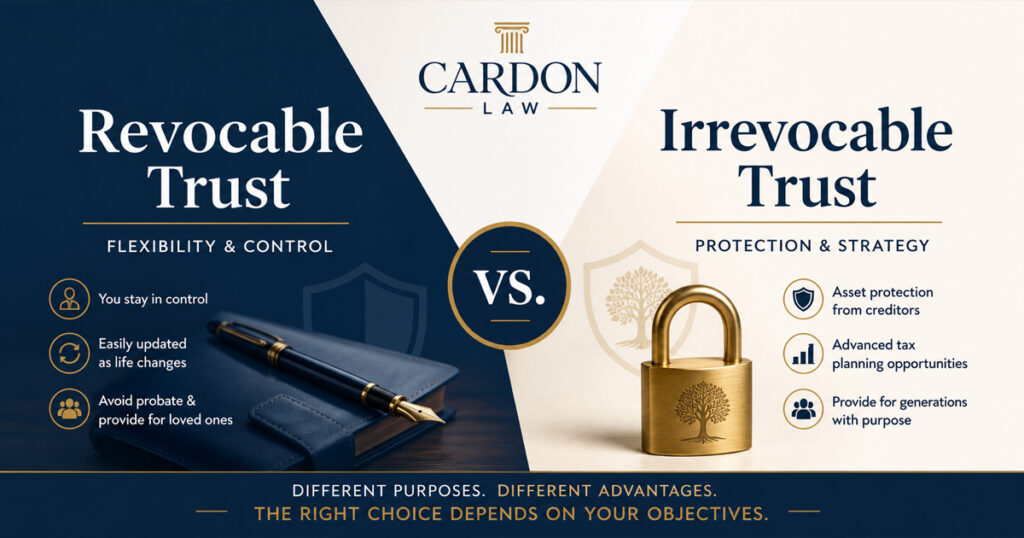
Comparison of revocable and irrevocable trusts, highlighting flexibility and control versus protection and advanced planning.

Revocable Trust vs. Irrevocable Trust

Revocable and irrevocable trusts serve different purposes. Compare how each handles control, flexibility, probate, asset protection, taxes, and other planning objectives.

Start the Conversation

Build the Plan Around the Life You Actually Have

Your estate plan should reflect the way your family, assets, business interests, responsibilities, and long-term goals actually fit together.

A consultation is the starting point for identifying what needs attention, what may already be working, and whether additional planning would meaningfully improve the structure you have today.